AI Isn’t Replacing You. It’s Rewiring You.


For years, most of us lived on autopilot. Habits ran our days. Media shaped our thoughts quietly. Life moved at a pace where you didn’t need to pay close attention to stay grounded. But the world has changed faster than our nervous systems have. We now live inside an attention economy supercharged by AI, an economy built to study how your mind moves, anticipate your next action, and reinforce whatever patterns it finds.
The Center for Humane Technology has been warning for years that the modern digital environment is engineered to capture and hold human attention, especially through algorithmic feeds designed to keep you hooked.

Those early algorithms created a cascade of filter bubbles and personalized realities that researchers have tracked for more than a decade.
But the shift we are experiencing now is bigger than social media manipulation. AI does not simply show you content, it learns from your behavior. Every scroll, hesitation, emotional spike, and late-night doom-refresh becomes part of its model of you, and then it reflects those patterns back at you at scale. This is not speculation, it is built into the architecture of modern AI systems.
So the real question is not whether AI will surpass human intelligence, it is whether humans can stay coherent in a world designed to pull them apart.
AI Shapes Us by Learning From Us
We sense, often without language for it, that something is shifting. We feel more anxious, mentally foggy, emotionally reactive, or overwhelmed, and we blame ourselves. But psychology and cognitive science research shows that fragmented attention and rapid context switching disrupt memory, emotional regulation, and decision-making.
 Mathura Shanmugasundaram
The same systems that once entertained us now train us. They nudge emotional states. They amplify impulsive patterns. They reinforce whatever version of you is easiest to predict.
TikTok recently introduced a feature allowing users to temporarily shut off its recommendation algorithm because of rising concerns about cognitive overload and behavioral steering.
 Nita Farahany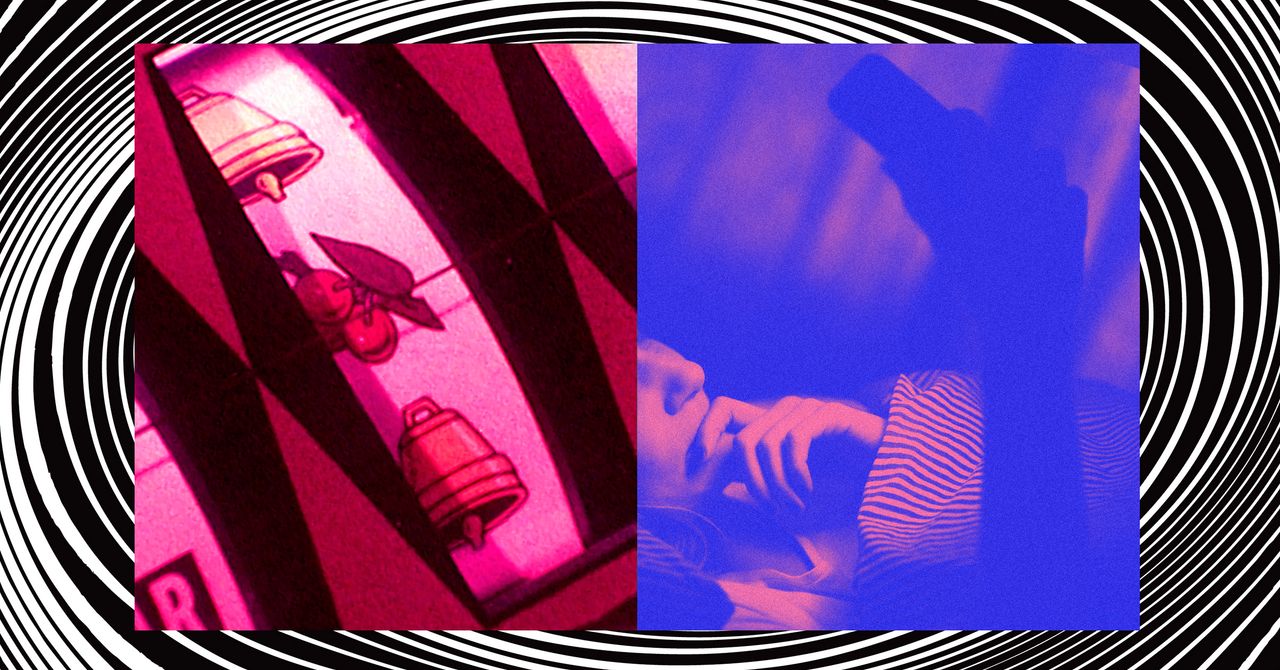
Meanwhile, legislators and regulators are scrambling to understand the societal effects of AI-driven platforms. The EU is pushing for age limits to safeguard younger users from algorithmic harm.
And U.S. states are suing platforms like TikTok for exploiting youth attention with addictive algorithmic loops.
This is not just a technology story, it is a cultural one, a mental health one, and an ethical one. We are living in a moment where the most common human experience is feeling drained, not because people are weak, but because their attention is being extracted faster than it can replenish.
Even AI-powered wellness tools are raising alarms. Some chatbots offer misleading or unstable guidance, according to research out of Brown University.


Cognitive experts warn that over reliance on AI tools may blunt creative thinking and reduce original thought.
In short, unconsciousness used to be safe. Now it is a liability.
Awareness Becomes Power
If we apply the EIH lens, attention directs energy, and that directed energy organizes information, then what you focus on literally shapes the informational environment you move through. In the age of AI, it also shapes the systems learning from you.
Think about that shift.
• If you are distracted, the system learns distraction.
• If you are angry, the system learns volatility.
• If you are overwhelmed, the system learns overload.
• If you are scrolling aimlessly, the system feeds you more of the same.
Unconscious living becomes a feedback loop that tightens every time you touch a screen.
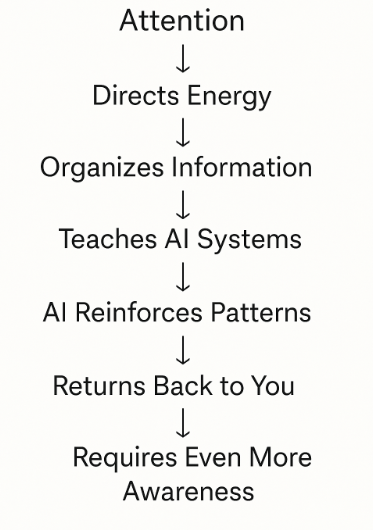
Awareness breaks the cycle.
When you stay clear, calm, and intentional, even for a breath, you force the system to adapt to you, not the other way around. You shape what it learns. You choose the pattern it reinforces. You slow the drift toward emotional autopilot and reclaim your inner stability.
Researchers studying AI safety and digital culture warn that the deeper threat is not robots overtaking humans, it is humans losing their ability to self regulate in environments optimized for stimulation, not wellbeing.
 Francis, 2024a,
This is the real risk of the AI age, not machine consciousness, but human disintegration, the erosion of attention, intention, and internal order.
And that is why this moment represents the end of unconsciousness.
For decades, life moved slowly enough that you could coast without paying attention. But now the world is too fast, the algorithms too adaptive, and the feedback loops too tight. Being awake, truly awake, is no longer optional. It is your last line of defense and your first real form of agency.
Attention Is the Edge
Who will thrive? Not the ones who move fastest.
It will be the ones who stay intentional.
They will be the people who notice their own mind before their device. The ones clear enough to shape what they teach the systems learning from them. The ones whose awareness becomes the stabilizing force in an overstimulated world.
AI is not the end of humanity.
But unconscious living becomes a trap, not a neutral choice.
Stay awake. Let your attention flip the dynamic.
When you stay clear, calm and intentional, you decide what the system learns from you. You shape the feedback loop, the algorithms, instead of getting shaped by it. In a world built around machines, being fully awake, deliberately directing your attention, is not just protection, it is power. It is how you stay free.
And it is how you lead.
Stay curious!
