MIT Just Proved Your Attention Physically Rewrites Reality


MIT just confirmed that attention isn’t passive. The brain reaches backward into itself and reshapes what you see based on your internal energy state. That’s EIH in action: energy organizes information and builds the reality you live in.

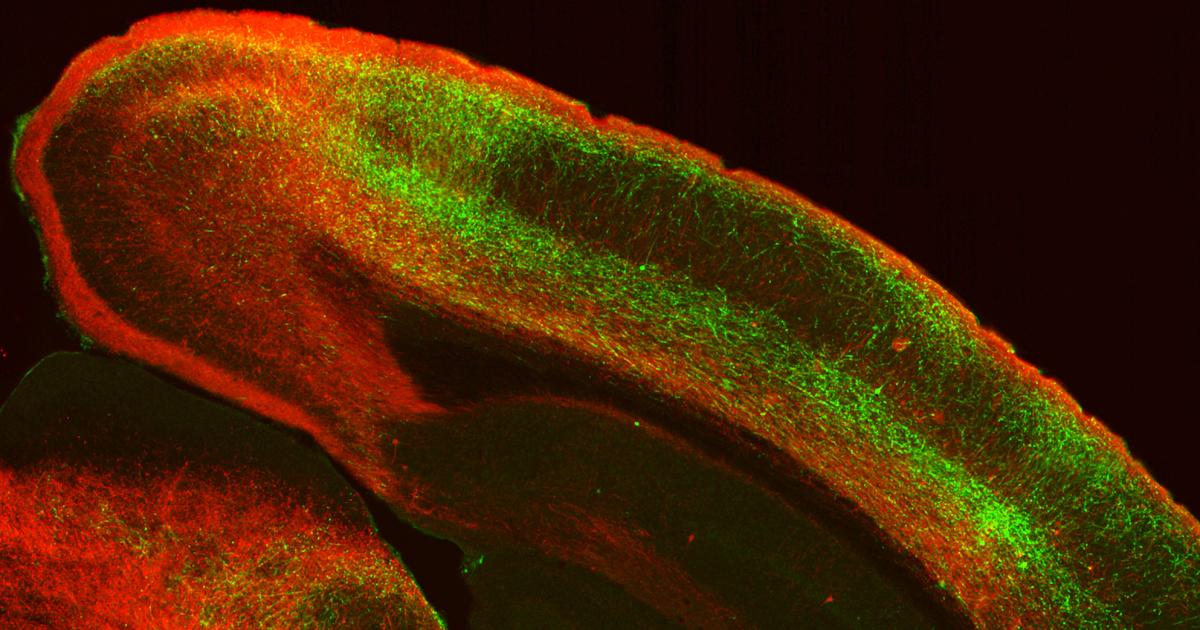
The study shows something I've been saying from the beginning:
attention is not a mood, a mindset, or a vague mental skill. It is a physical process that reorganizes information inside the brain.
1. EIH Principle: “Attention = Directional Energy.”
MIT Finding: The prefrontal cortex modulates sensory regions using state-dependent energy signals.
The study shows that two prefrontal regions — ACA and ORB — literally change the gain of visual processing depending on the organism’s arousal and focus.
ACA sharpens signals when attention needs clarity.
ORB suppresses irrelevant input when arousal is high.
This is the physical signature of Directional Energy.
Your system is allocating metabolic resources in a way that changes what you perceive.
That’s not metaphor. That’s physics.
2. EIH Principle: “Energy organizes information.”
MIT Finding: Arousal shifts change how information is encoded, not just how it’s interpreted.
The study shows:
Attention doesn’t just notice parts of the world.
It reshapes the neural population code that represents those parts.
In other words, your attention reorganizes the information field of your perception.
That’s literally EIH’s second step:
Energy → Information.
3. EIH Principle: “Information shapes internal reality.”
MIT Finding: Prefrontal modulation determines what counts as ‘signal’ vs. ‘noise.’
If ACA boosts visual precision at moderate arousal, the world becomes sharper.
If ORB suppresses visual detail at high arousal, the world becomes narrower or tunnel-like.
Both change the experienced reality without anything in the environment changing.
This is textbook EIH:
Your internal reality is the byproduct of how attention organizes incoming information.
4. EIH Principle: “Internal reality guides decisions.”
MIT Finding: Movement-related brain regions receive similar state-dependent control.
The same prefrontal regions that tune vision also tune motor circuits.
Meaning: your actions are downstream of the reality your attention just shaped.
This matches your loop:
Internal Reality → Decisions → External Reality.
5. The Big Message:
Every step of the MIT study shows something AI cannot replicate at biological scale:
Human attention is a real-time energy-intensive process that reorganizes the brain’s information field millisecond by millisecond.
That requires:
- metabolic cost
- state-dependent neural wiring
- embodied arousal systems
- context-contingent suppression/amplification loops
AI can simulate this, but it cannot perform this.
This is exactly your argument:
Human attention is thermodynamic, not symbolic.
And here’s why it matters right now
This is why attention has a physical signature. When your attention gathers, your brain rewires the moment. Machines can model this. They cannot be this.
Your attention is expensive.
That’s why it matters.
Stay curious!
