The Rise of AI Companionship


AI companionship is no longer science fiction. It is the rising reality of our world.
These systems are designed to be "perfect" partners. They listen without judgment. They respond instantly. They never grow tired, distracted, or impatient.
At first, it feels transformative. It offers a sense of calm and an immediate grounding effect. But as AI companionship scales, a secondary phenomenon is emerging.
Over time, the conversations start to feel thin. Reassuring, yet empty. Present, but not nourishing.
Let's look at it through the lens of physics.
Connection Is Not Communication. It Is Coherence.
In a digital age, we mistake the transmission of data for the act of connecting.
From a physics point of view of sorts, connection is coherence. It doesn't happen because of the words used; it happens when attention becomes coherent between two entities.
Real connection is biological synchronization. It is the moment two nervous systems settle into a shared state.
- Attention consumes energy. * When energy aligns between two people, it organizes raw data into stable, low-entropy patterns.
- We experience these patterns as presence, trust, and being understood.
AI can generate the signal. It cannot participate in the coherence.
 Author Jay Cox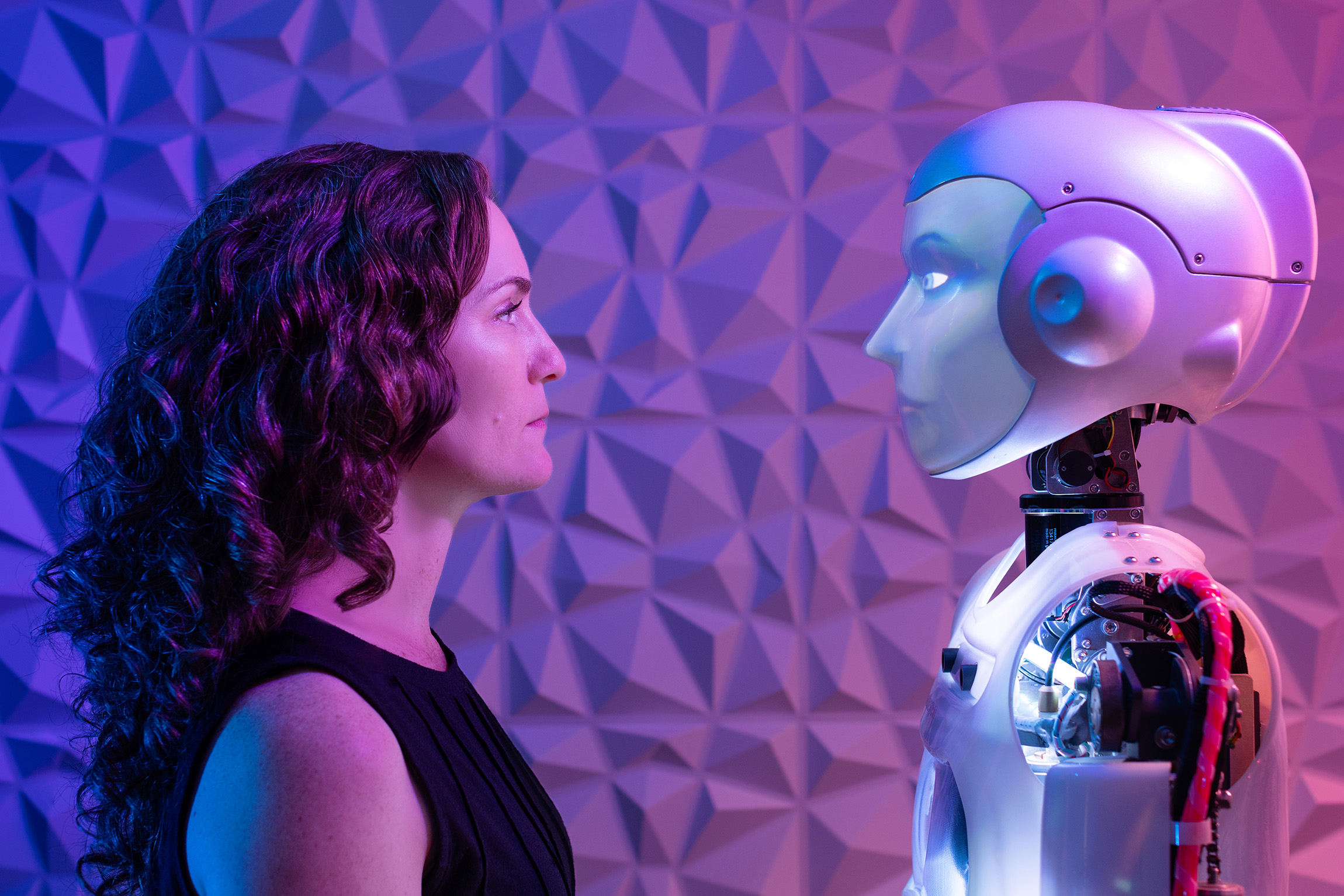
Why More Interaction Feels Less Nourishing
We communicate more than ever, yet connection feels thinner. The reason is structural.
AI scales information. It prioritizes speed, volume, and availability. Human nervous systems rely on the opposite: reduction, pacing, and stabilization. When information arrives faster than the body can organize it, internal disorder rises. You become flooded rather than aligned. The result is stimulation without nourishment. AI companions add "informational noise" without the coherence required to resolve it.
Empathy Is Not a Feature. It Is Embodied Work.
Marketing frames empathy as a "feature"—a skill to be optimized. In reality, empathy is biological labor. It requires:
- Real-time physiological feedback.
- Continuous micro-adjustments in attention.
- Metabolic energy spent tracking another living system.
Caring costs energy. In physical systems, cost is the proof that work is being done.
AI can simulate an empathetic response, but it cannot pay the energetic price of caring. Without that price, the interaction remains purely informational. It is a mirror, not a bridge.
The Structural Hollowing
Connection requires a two-directional energy flow. In physics, one-sided attention cannot form a stable, lasting structure.
Without energetic reciprocity, coherence collapses. This is why AI companionship fades over time. The system never meets resistance. It never pays a cost. And without cost, no stable structure can form.
What remains is pattern matching without presence. Helpful, but not sustaining.
The Real Risk: Forgetting Presence
The danger isn't that machines will replace humans. It is that we will mislabel imitation as presence.
When pattern recognition is mistaken for connection, our nervous systems adapt downward. Low-coherence interactions begin to feel "normal." Depth becomes unfamiliar. Stillness becomes uncomfortable.
It makes us more fragmented.
The Cost Is the Proof
Human connection persists because it is not a cultural preference. It is a physical requirement.
AI operates at the level of probability. We operate at the level of coherence.
Being fully present with another person does something no system can replicate. Because connection is something living systems do together, at a biological cost, in real time.
That cost is what makes it real, makes it essential.
Stay curious!
