Your Brain Runs on Physics that AI Can’t Copy

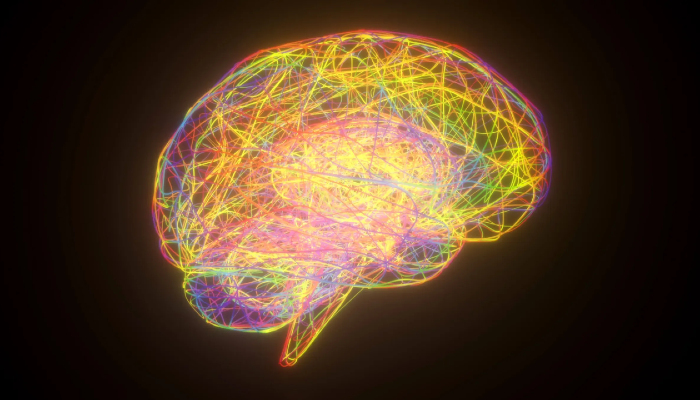
In the shadow of accelerating AI, where algorithms devour jobs and weave surveillance webs, a quiet revolution stirs. It’s not in silicon circuits, but in the subtle physics of human attention. The Energetic Information Hypothesis (EIH) posits that attention isn’t mere focus: it’s a directional force of organized energy, woven into reality’s informational fabric.
By 2029 most routine cognitive work will be automatable. That part is not speculation.
- McKinsey (2023) and Goldman Sachs (2023) projections that up to 300 million full-time jobs could be impacted by AI globally, especially in routine cognitive roles like data entry, customer support, basic analysis, and content generation.
- Research by Frey & Osborne (Oxford) and the OECD, which identifies routine, predictable cognitive work as highly automatable — often above 60–70%.
What is speculation, but now testable, is whether anything fundamentally scarce remains on the human side.
The Energetic Information Hypothesis (EIH) offers a candidate: coherent human attention as a physical, low-entropy ordering process that no current architecture can endogenously replicate.
EIH stands on three pillars, all peer-reviewed and uncontroversial, to converge on this possibility:
- Information is physical and has thermodynamic cost.
Landauer 1961: erasing one bit dissipates ≥ kT ln 2 energy
 Iulia Georgescu
Information is physical
- Focused attention produces measurable neural coherence and entropy reduction. Fries 2005 – gamma-band synchrony as the mechanism of attention
- Observation collapses uncertainty via decoherence, not magic.
Zurek 2003 – standard explanation of the quantum-to-classical transition. Wheeler’s participatory anthropic principle (the origin of “it from bit”)


Wheeler’s participatory anthropic principle
EIH does not violate any of these established foundations.
It simply re-describes decoherence from the observer’s side: sustained coherent attention is a biological process that reduces local informational entropy in a way that is energetically expensive and presently non-replicable at scale.
 Wojciech H. Zurek
Where AI Wins. And Where It Hits a Wall.
A Prediction.
- Surveillance: They can track every click, but they’ll never read the one signal that actually matters: your coherent inner state. Physics, not privacy laws, keeps that door locked.
- Job loss: Most jobs are gone. The ones left pay 5–10× because they need something AI can’t fake: expensive, coherent human judgment. (Look at top strategy, therapy, and creative roles right now, that split is already happening.)
- Deepfakes & lies: Machines still can’t beat a calm, focused person at spotting what “feels off.” Distributional shift detection is still a super-power when your attention isn’t scattered.
- Existential risk/super-AI: If steering reality at scale requires actual consciousness (not just more compute), then pure silicon scaling runs into a hard ceiling no parameter count can climb.
Testable prediction (2026–2028 window)
Running a sustained-attention vs control groups on RNG or weak-measurement setups while measuring EEG gamma coherence and system entropy.
A detectable deviation would falsify (or support) the hypothesis. The future is not “Artificial Intelligence takes everything.”
It is “AI takes everything that can be high-entropy.”
Attention — physically coherent, biologically expensive, experientially irreducible — is the lowest-entropy signal we have left.
A Future Where Humans Are Not Replaced but Exposed
AI does not eliminate human value. It exposes whether your internal system is coherent or chaotic. The future belongs to minds with regulated energy, attention that can hold a stable signal, identities grounded in purpose, nervous systems that don’t fragment under noise. AI magnifies whatever structure you bring into the interaction. And clarity is structure.
The Human Edge
Here is a simple summary of everything EIH implies for the age of AI:
- AI organizes external information.
- Attention organizes internal information.
- Only one of these can generate meaning.
- Only one can choose direction.
- Only one experiences reality from the inside.
- AI is powerful.
- Attention is sovereign.
- Use it intentionally, and the future bends.
Master it, or become noise.
Stay curious!
